
Our Process
How we make cold-process soap
Cold process is one of the oldest and most authentic ways to make soap. It takes weeks, not hours, and it keeps the good parts of each ingredient in the bar.
The steps
Blend oils and butters with lye
Plant oils and butters are mixed with sodium hydroxide (lye). This starts saponification, which turns them into soap and natural glycerin.
Add botanicals
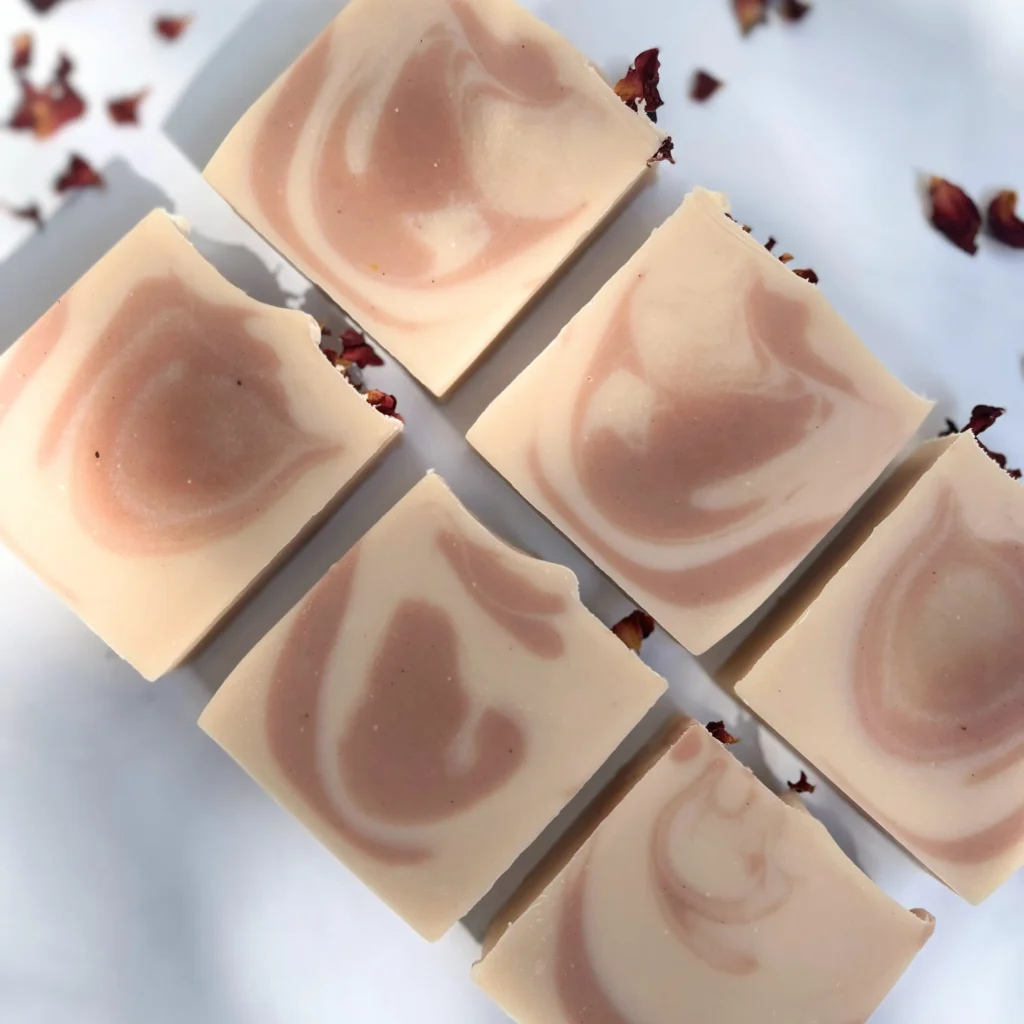
Clays, plant powders and pure essential oils give each bar its colour and scent.
Cure for 4 to 6 weeks
Water evaporates and the bar hardens. It lasts longer and becomes gentler on skin.
Handmade in small batches
Each batch is crafted individually rather than mass-produced, for consistent quality.
Clearing the myth
Is there lye in the soap?
All real soap is made with lye. But none remains in the finished bar: it reacts completely with the oils during saponification.
What’s left is soap and glycerin, a humectant that helps skin hold moisture. Many commercial soaps remove the glycerin. We keep it in.
Ingredients
What we use, and why
Oils & butters
Coconut oil
Cleanses without stripping moisture
Olive oil
Antioxidants and vitamin E; conditioning
Almond oil
Vitamins A and E, omega fatty acids
Castor oil
Helps skin hold moisture
Shea butter
Vitamins A, E and F; nourishes dry skin
Natural additives
Pink clay
Calming, good for sensitive skin
French green clay
For oily or congested skin
Turmeric powder
Evens the look of skin tone
Moringa powder
Rich in antioxidants
Lemon peel powder
Vitamin C, gentle exfoliant
Essential oils
100% pure, plant-based
Lemon, lemongrass, grapefruit, orange, rose geranium, bergamot, peppermint, tea tree, eucalyptus
Colour
Only from clays and plant powders
Never used
- Artificial colours
- Synthetic fragrances
- Harsh detergents
- Parabens, sulfates, preservatives
Find the bar for your skin
Our soaps are made for different skin types.